🛣️ The road to LA 2028 and the 2028 World Triathlon Championships in Tauranga demands immediate focus. But what about the generation that will follow?
How does Triathlon New Zealand ensure the knowledge, experience and ambition of its coaching community are harnessed to build a pathway that reaches beyond 2028, towards Brisbane 2032 and a more inclusive future for the sport?
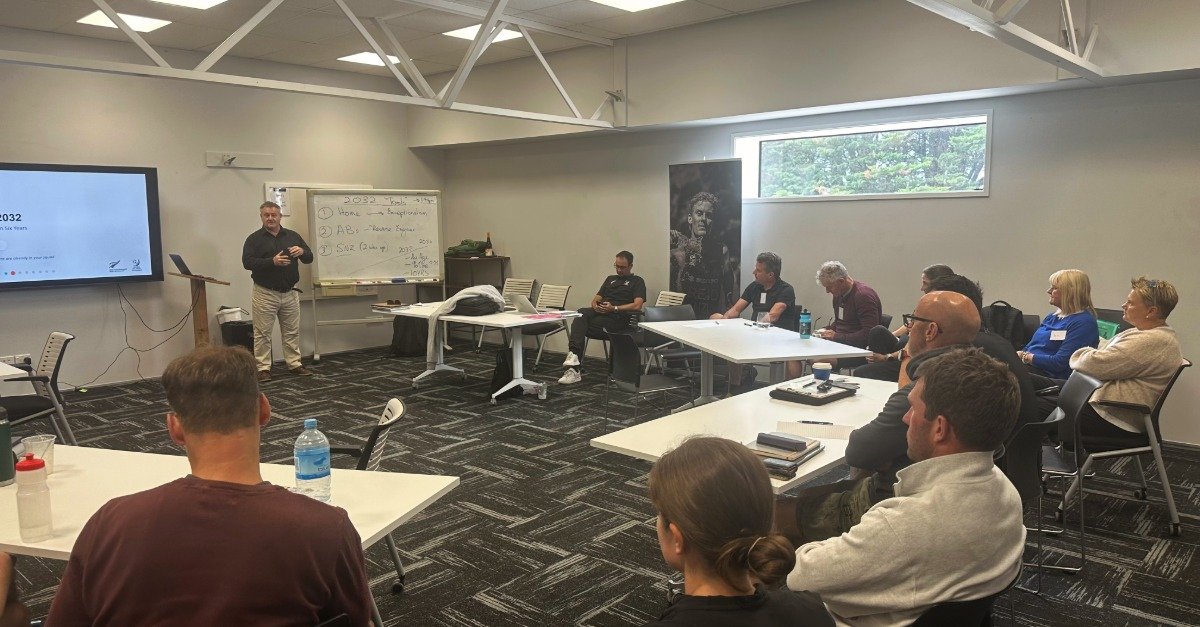
Those were among the questions at the heart of Tri NZ’s Coaching Forum, which brought together elite, development and aspiring coaches at the Adams Centre for High Performance in Mount Maunganui on the eve of last weekend’s World Triathlon Cup Tauranga.
The first such gathering in a number of years, the forum was designed to challenge thinking, encourage alignment between coaches and the national programme, and begin building a more connected coaching community.
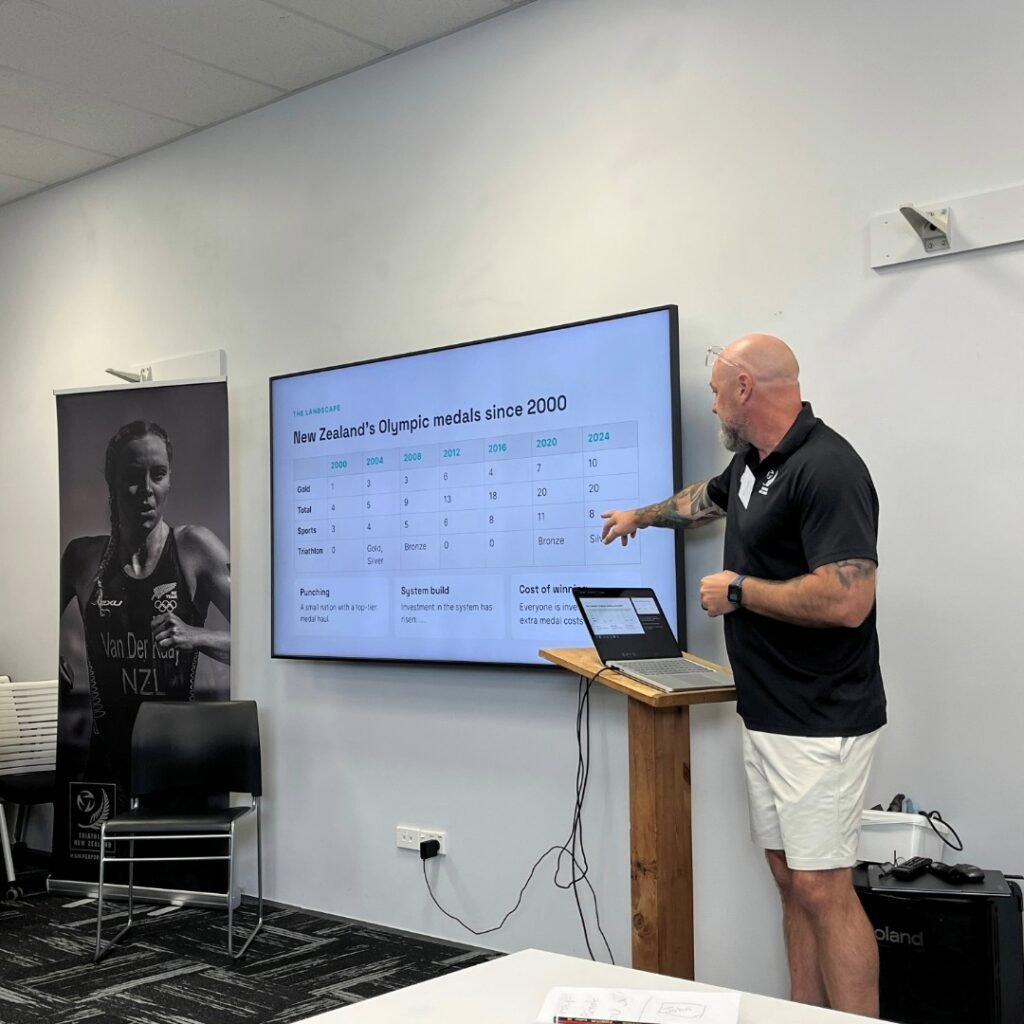
The day covered the state of the Tri NZ High Performance programme and the plan for LA 2028, lessons from the recent European season training camp in Banyoles, Spain and planning for Brisbane 2032. Panel discussions and smaller learning groups gave coaches the opportunity to share their experiences, challenge the programme’s thinking and contribute their perspectives to the future direction of the sport.
Travis White, Tri NZ’s General Manager of Performance (pictured above), said the forum was an important step towards making better use of the significant knowledge and expertise already within New Zealand’s swim, bike and run coaching community.
“The athletes who’ll race in Brisbane in 2032 are likely already in our coaches’ squads today, White said. “Our job is to build a pathway that lets them, and the coaches who develop them, grow together.”
That pathway depends on more than the work of the national programme alone. It requires strong relationships, open communication and a willingness to learn from coaches working with athletes at every level and across every part of the country.
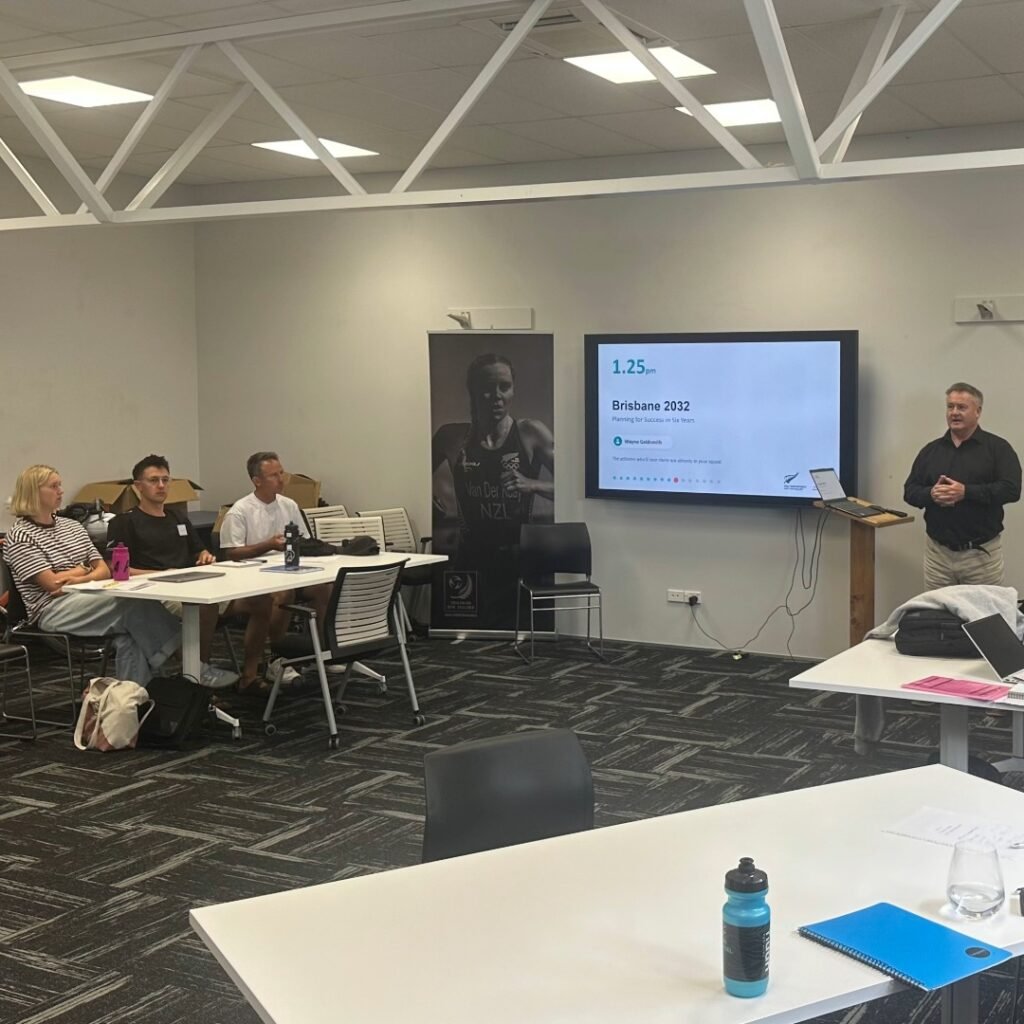
Tri NZ Technical and Pathway Lead, Stephen Sheldrake, said the forum was about creating the environment and connections to make that happen.
“We have a significant amount of coaching knowledge and experience across New Zealand. The forum was about bringing that together, strengthening relationships and creating an environment where coaches feel comfortable sharing, challenging and learning from one another, regardless of their experience or where they coach within the pathway.
“As a national programme, we have an important role to play in supporting the ongoing development of our coaches, while recognising how much we can learn from those working with athletes across the country every day.”
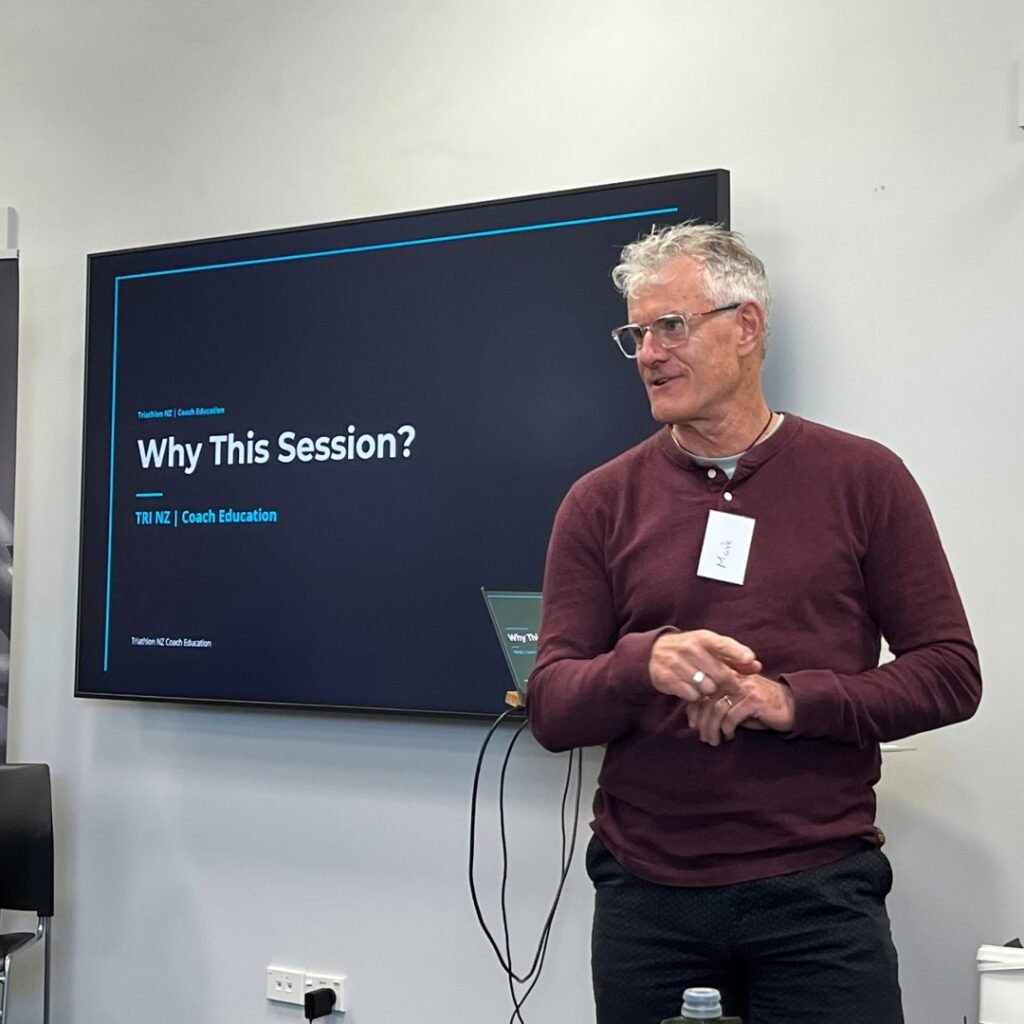
The forum featured internationally recognised coaching expert Wayne Goldsmith, who spoke and facilitated a session during the day, bringing his extensive experience in coaching, sports performance and leadership to the discussions.
For Sheldrake, the gathering was an important first step in making coach development a more deliberate and collaborative part of Tri NZ’s work.
“Saturday was the first step towards building a better-connected coaching community, where coaches have opportunities to grow, access expertise and support one another.
“If we want to continue raising the standard of triathlon in New Zealand, we need to be as deliberate about developing our coaches as we are about developing our athletes.”
With Tauranga set to host a round of the new T50 Triathlon World Tour in 2027 and the T50 Grand Final and Age Group World Championships in 2028, the forum is intended to be the first of an annual gathering.