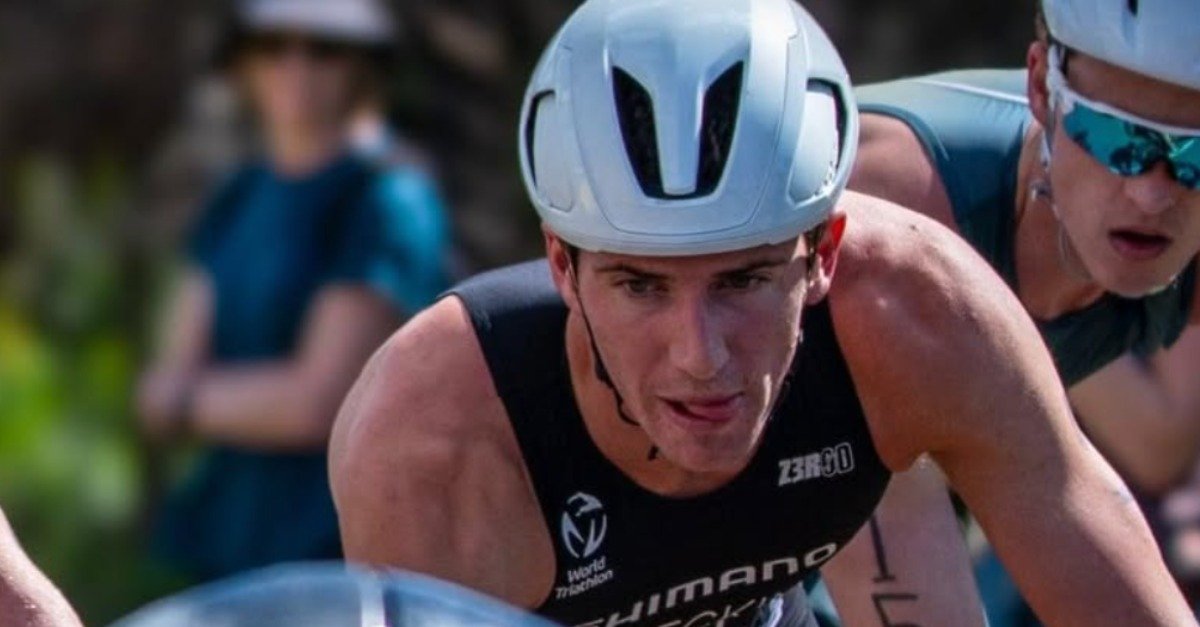
🤫 Henry McMecking’s rise has been done quietly, the sort of progress that shows up in results before it shows up in headlines. This weekend, the noise will be unavoidable, a debut at WTCS level in Quiberon that will give hint to the reality of his upgraded LA Olympic Games dream.
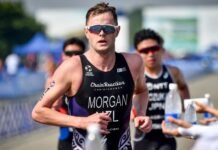
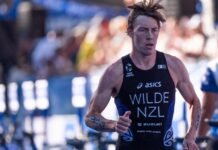
The 22-year-old Cantabrian sits 62nd in the world, New Zealand’s third-highest ranked male behind only Hayden Wilde and Saxon Morgan. Even a year ago, that sentence wouldn’t have made sense.
(Ed’s note: Illness ruled McMecking out of Quiberon but his progress and ambitions stand. Read on for fascinating insight…)
“I don’t think anything has changed for me, I’ve just continued trusting in myself and the support team around me,” McMecking says.
“It comes down to consistency in training and getting races under the belt. Training consistency obviously brings good fitness and form, but the ability to capitalise from that work in racing is something different. I always take something away from each race to learn from and try to be a better version of myself in the next one.”
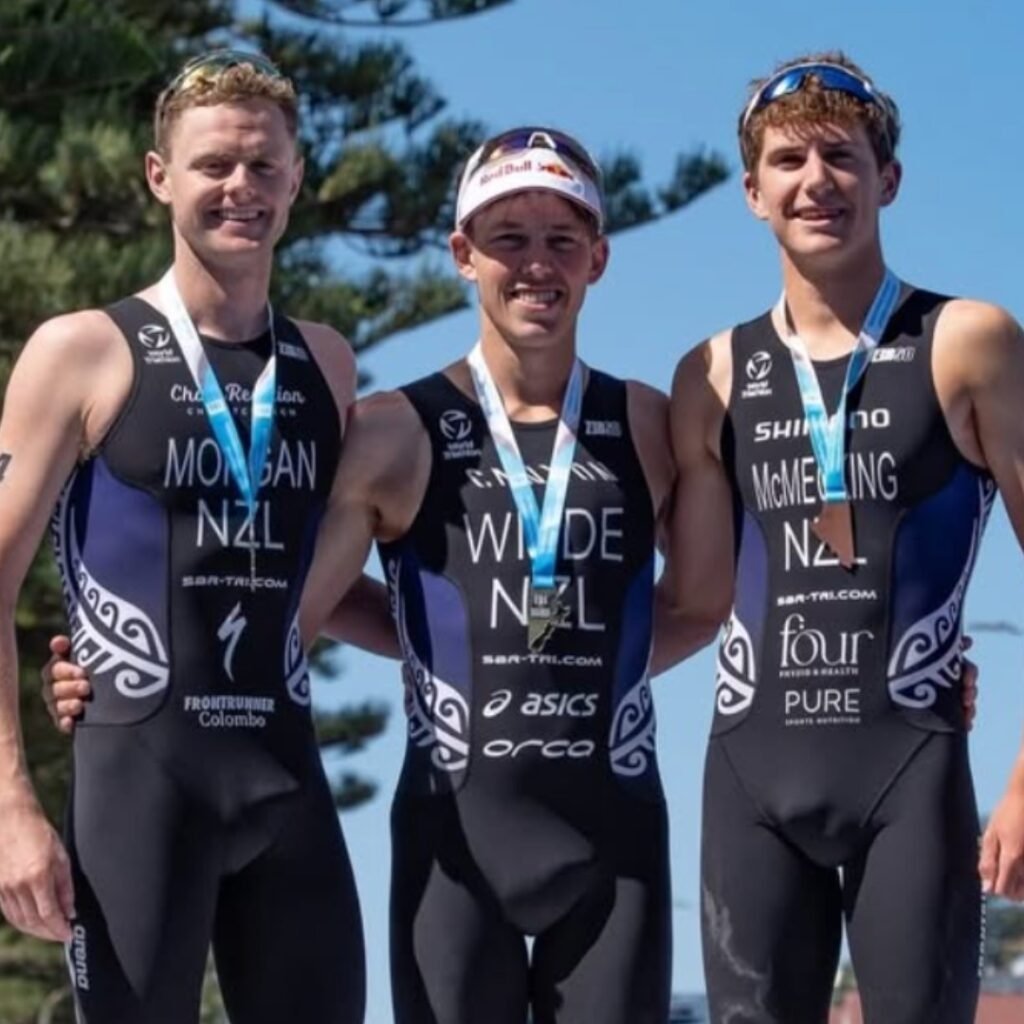
That consistency produced an all-Kiwi podium — third behind Wilde and Morgan, and the U23 title — at March’s Oceania Sprint Championships in Napier, 9th (4th U23) at the Oceania Standard Distance Championships in Devonport, and 5th (2nd U23) at the Oceania SuperSprint Championships at Runaway Bay on the Gold Coast.
It’s also pushed McMecking past two more decorated names on the current world rankings. Tokyo Olympian Tayler Reid sits 109th, still building back into the season with Quiberon just his third start of 2026. Paris hero Dylan McCullough, who sacrificed his own race to help deliver Hayden Wilde’s silver medal and has been fighting back from 18 months out, is down at 152nd — despite back-to-back comeback wins in Asia.
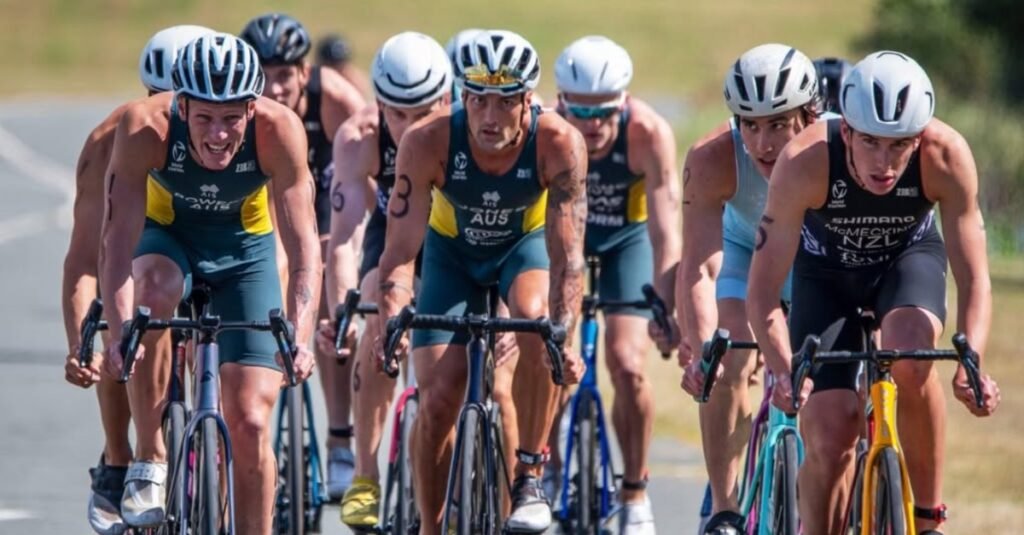
The second of those wins came at Asia Cup Osaka Castle in late May, where McCullough led home a podium that also included 18-year-old Junior Caleb Wagener in third. McMecking was the best of the Kiwi rest, 8th overall.
“Osaka didn’t unfold quite how I wanted it to,” he says. “Have to give credit to Dylan, who did as Dylan does and rode off the front after leading the swim. We rode hard in the chase pack but he is just too strong on the bike. I knew I hadn’t been feeling quite myself in training since the Gold Coast. During the race I just didn’t feel what I normally would, especially swimming and running. I’ve just tried to move on from Osaka as I know it doesn’t reflect what I’m capable of.”
The response has been to adjust training through the early Banyoles block rather than dwell on it. McMecking has also been managing a minor illness this week, one of those things that comes with a European campaigns, but it hasn’t dimmed his excitement for what comes next.
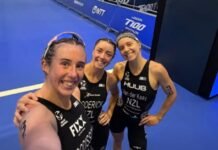
Saturday’s race marks his first appearance on a WTCS start list. Quiberon is followed almost immediately by World Cup Tiszaujvaros next weekend alongside Brea Roderick, then WTCS Hamburg in July — which doubles as the Sprint and Mixed Relay World Championships.
“Earlier this year when I was racking up some good points in Oceania and realised this was a potential opportunity, I was super excited,” he says.
“WTCS in my eyes is the most competitive series of triathlon racing in the world. It’s every triathlete’s dream to be racing in the top flight, so to see my name make the start list for Quiberon and Hamburg felt surreal.
“For now I’m just feeling the excitement as I don’t have any expectations of myself for my first crack at this level. Of course I want to get the best result I can, but I know that will come from getting the very best out of myself on the day, not just aiming for a place.”
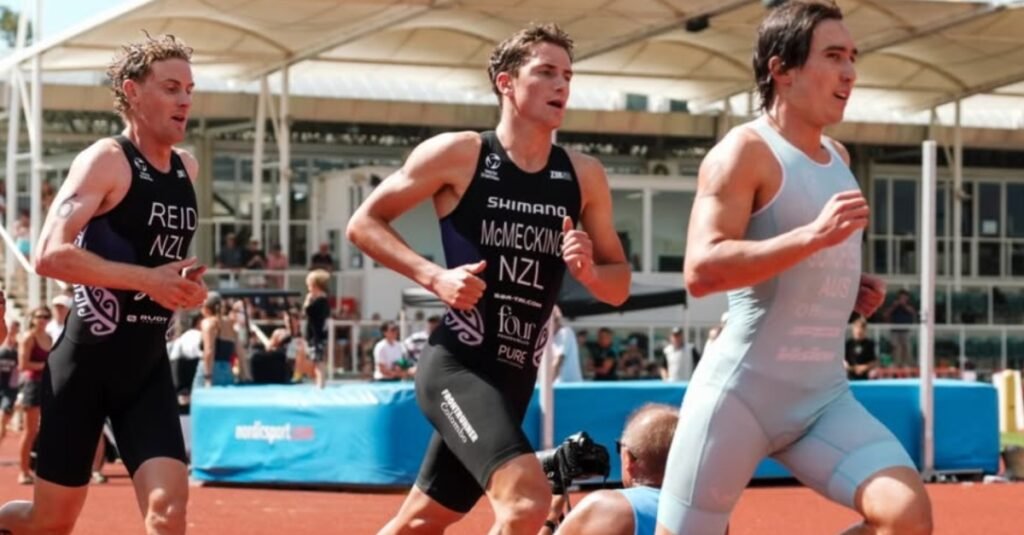
It’s a mindset he’s carrying in deliberately, rather than letting the occasion dictate it. But don’t think he won’t be trying to upstage Morgan and Reid, far more experienced WTCS racers. That’s simply what you have to do if you want to keep your name in the frame for the Olympic Games where Wilde is seemingly a lock for one of a possible three (at best) and maybe only two Kiwi male slots.
“If I can race my first World Series with the same mindset I race Continental Cups and World Cups with, I think that’s a positive,” he says. “Like I can race the best guys in the world and not feel out of place. Obviously there is TAPS [funding] criteria and Olympic criteria I want to achieve, but I know these will come from me doing my very best with what I have on the day.”
That Olympic criteria question is no longer hypothetical. Last year, McMecking says, LA28 wasn’t on his radar at all.
“I definitely would have said LA was not possible for me 15 months ago. I only really started to see myself as a potential candidate for LA at the end of 2025. My 2026 Oceania season confirmed that I am among the best Kiwi men, so I do have LA as a genuine target.
“There’s a lot of progress I know I can make, but two years gives me plenty of good runway. Brisbane [2032] is probably slightly more realistic, but I’m not counting LA out — and either way, the result this weekend is unlikely to change those feelings.”
Away from racing, McMecking works as a geologist for a small mining company, having completed a Bachelor of Science majoring in Geology at the University of Canterbury — a degree he finished as his triathlon form was quietly climbing.
“Actually not having university stress is probably something that’s changed,” he says. “I still work 15 hours a week at home but it’s not as stressful or time-consuming. It’s almost a good way to have something else to do away from training.”
Work has been a nice distraction but this weekend, McMecking is focused on digging into the WTCS for the first time. The layers he uncovers will tell him plenty.