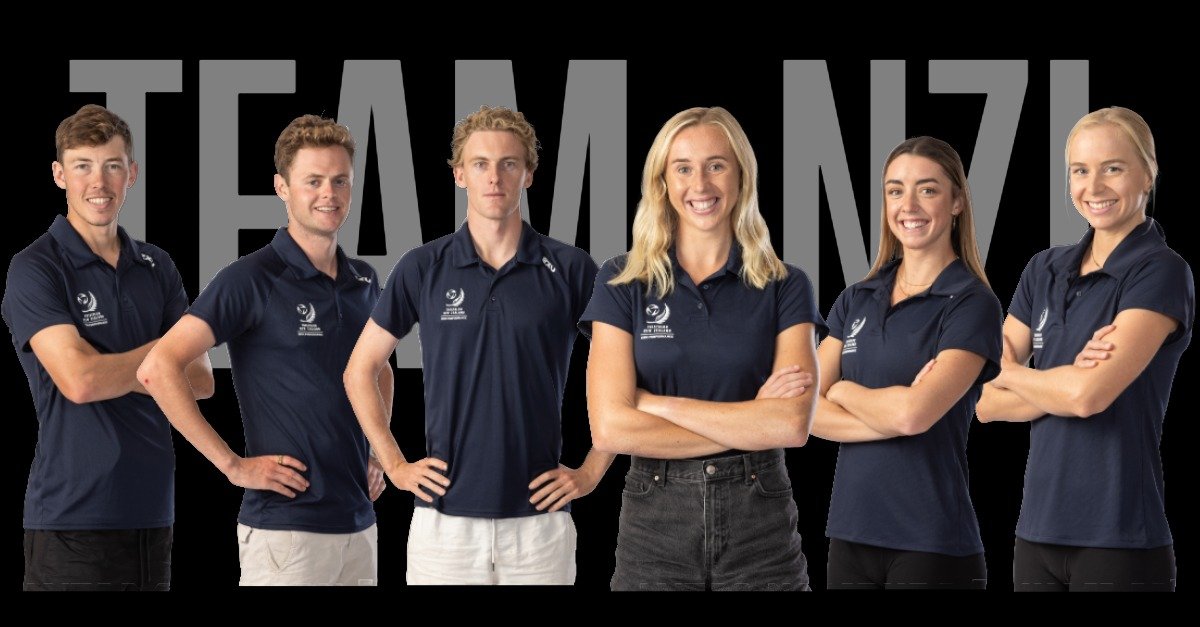
The triathletes charged with launching Team NZL’s Los Angeles 2028 Olympic Games campaign have been unveiled.
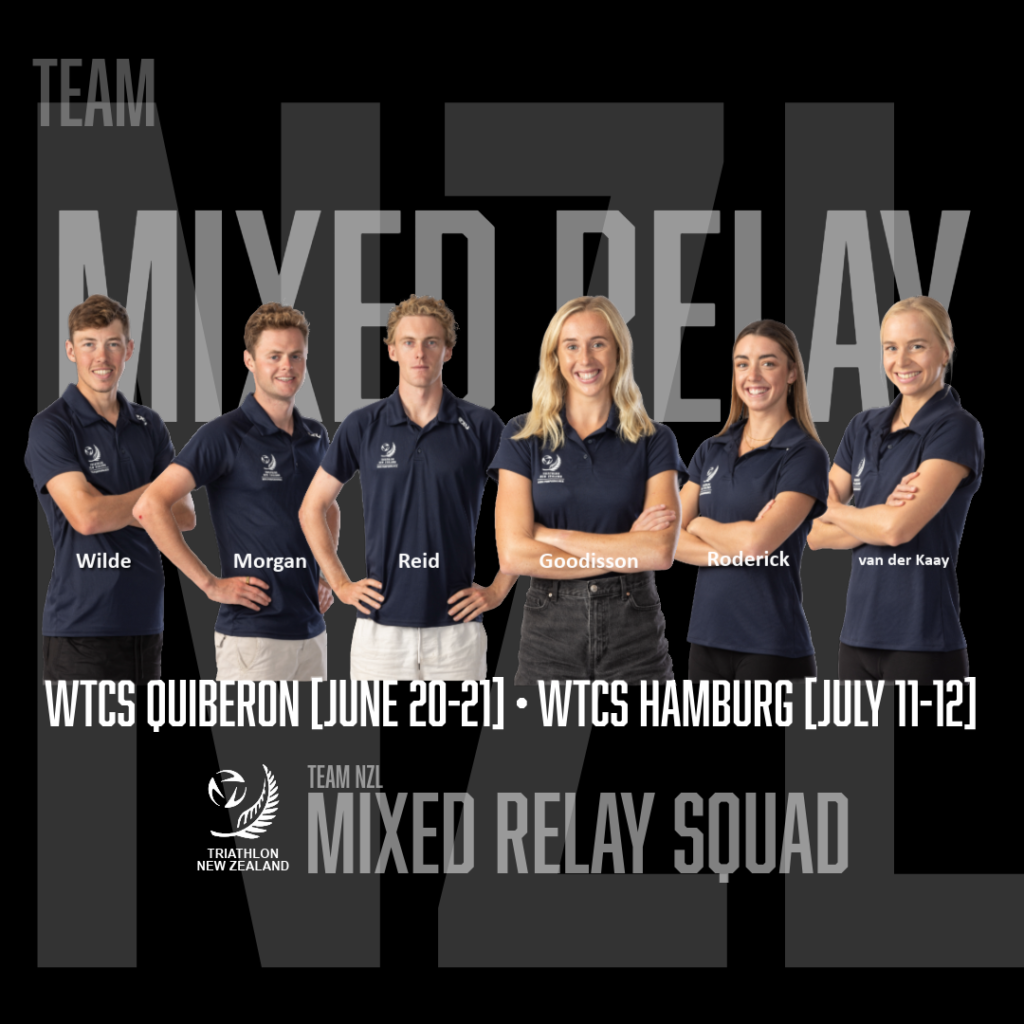
Saxon Morgan, Tayler Reid, Hayden Wilde, Eva Goodisson, Nicole van der Kaay and Brea Roderick have today been named in a six-strong Team NZL Mixed Relay (MR) squad for upcoming World Triathlon Championship Series (WTCS) events in France and Germany.
The events in Quiberon, France (June 20-21) and Hamburg, Germany (July 11-12) serve double duty as individual WTCS sprint races and mixed relays, with the MR’S the first to offer LA28 Olympic points following the opening of the qualification window on May 18. The final quartets for the Sunday relays will be selected after the individual racing at each event the previous day.
While WTCS points and podiums remain critical in the individual Olympic chase, the MR has become the centrepiece of modern Olympic triathlon strategy.
Under the LA28 qualification system, nations can again secure two men’s and two women’s Olympic quota spots via the MR pathway, making relay depth — not just individual stars — essential to national selection planning.
That reality helps explain the significance of the Quiberon-Hamburg double-header, the latter doubling as the 2026 World Triathlon Mixed Relay Championships.
Though the WTCS calendar has shifted slightly since the qualification system was first unveiled (courtesy of the Middle East conflict) the European relay block remains the opening phase of a qualification process expected to define the fortunes of New Zealand’s next Olympic generation.
The Relay Race Inside the Olympic Race
For Team NZL, the challenge is twofold.
Firstly, New Zealand must remain inside the Olympic Games MR qualification positions across the two-year Olympic cycle.
Why? Because across the Olympic field, 22 of the 55 places per gender will be taken via host nation and MR pathways.
Team USA automatically qualify as hosts while Hamburg in 2026 and 2027 are biggies. As the World Championships, they carries automatic LA quota allocation for the winning nation and significantly more points than regular World Series MR events for every other country. World Cup and Continental Mixed Relay Championships offer fewer points again.
One of the major changes for LA28 is a new safety valve: the highest-ranked nation from each continent not otherwise qualified can earn a MR slot. For Oceania, that puts New Zealand and Australia into a direct contest.
But assuming reigning world champions Australia remain entrenched near the top of the world rankings, and assuming Team NZL doesn’t win either of the automatic Hamburg 2026 or 2027 qualification spots (they will certainly be trying) — history points to a world ranking somewhere around the top eight to top 10 likely being enough.
The Battle for Extra Olympic Quota Spots
But the relay pathway is only part of the equation.
Team NZL could also expand beyond the base MR allocation through the individual world rankings should enough athletes rise into the upper reaches of the Olympic qualification standings over the next 24 months.
Under the Olympic qualification system, nations can earn a third individual men’s and women’s slot if they place three athletes inside the top-30 of the final Olympic rankings.
That scenario remains ambitious for New Zealand but not impossible given the established pedigree of Tokyo bronze and Paris silver medallist Wilde and experienced Olympians van der Kaay and Reid, alongside the emergence of athletes such as Goodisson, Roderick and Morgan.
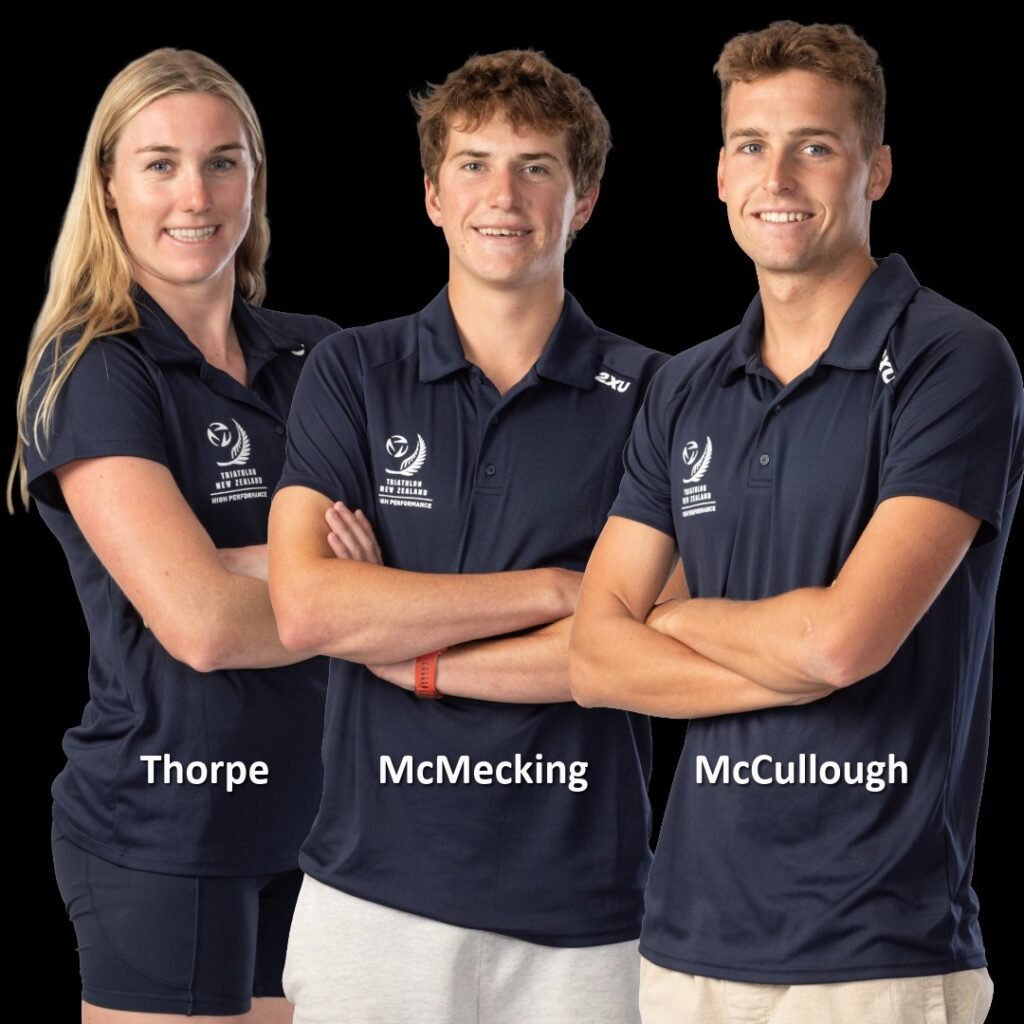
Also firmly in the wider LA28 conversation are Paris Olympian Dylan McCullough, dual Tokyo and Paris Olympian Ainsley Thorpe, neither of whom were considered for relay selection due to injuries, and the up-and-coming Cantabrian Henry McMecking.
McCullough continues his comeback from injury and is understood to be targeting a return via Asia Triathlon Cup races in Lianyungang (China) on May 23 and Osaka Castle (Japan) on May 31, suitably targeted Continental Cup level events before he eyes later World Cup and WTCS racing.
No firm timeline has yet been set for Thorpe’s return to international competition, with the former world No.12 currently ranked 129th globally.
McMecking, fresh from graduating from the University of Canterbury with a Bachelor of Science in Geology and a minor in Geography, has just enjoyed his best Oceania season to date is looking to make the best use of his current world ranking of 68.
In that context, every WTCS start now carries dual importance, not only for MR ranking points, but for the individual world ranking accumulation that could ultimately determine the size of Team NZL’s Olympic triathlon squad for Los Angeles.
Wilde Leads Deepening Kiwi Push
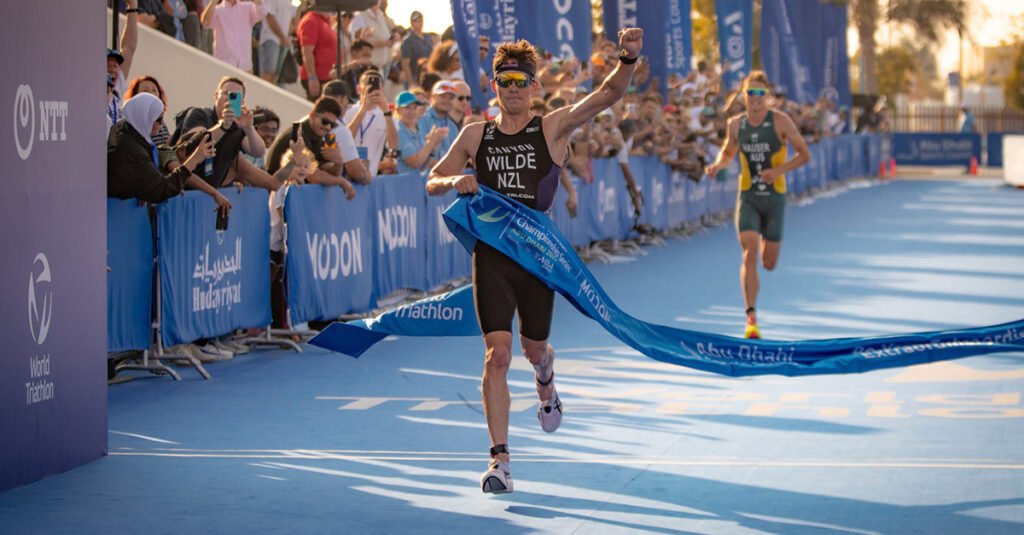
The men’s side will again revolve heavily around Wilde, who arrives in Europe in ominous form after his record-breaking demolition job at T100 Singapore further underlined his status as one of the sport’s premier all-format athletes.
Yet WTCS racing remains a very different beast to middle-distance competition, and Wilde’s return to Olympic-format racing at WTCS Alghero on May 30 comes against a backdrop of stacked international fields already building toward Los Angeles.
Morgan and Reid also enter the European campaign knowing every WTCS start now carries heightened Olympic significance.
Both recently finished down the results sheet at WTCS Chengdu – Reid 35th and Morgan 50th – in a race that served as another reminder of the brutal depth emerging globally early in the new Olympic cycle.
The women’s selections perhaps best illustrate the balancing act Tri NZ now faces between proven performers and emerging Olympic prospects.
Van der Kaay’s “two-speed season” continues to evolve impressively as she balances WTCS ambitions alongside a rapidly growing T100 profile. The Kiwi No.1 recently backed up her strong T100 Gold Coast debut with another Oceania SuperSprint title and is also locked in for T100 Spain on May 23 before returning focus to Olympic-distance racing.
Goodisson, meanwhile, faces an enormous benchmark test at WTCS Alghero where she will line up against one of the deepest women’s fields assembled this season. Olympic champion Cassandre Beaugrand, world No.1 Beth Potter, reigning world champion Lisa Tertsch and a host of global stars headline a start list that shapes as an early LA28 measuring stick.
Roderick’s inclusion further reinforces Tri NZ’s commitment to building broader relay depth across the women’s programme, a critical component if New Zealand is to remain consistently competitive in the increasingly specialised relay discipline.
For Tri NZ, the road to Los Angeles no longer feels theoretical.
It starts now.