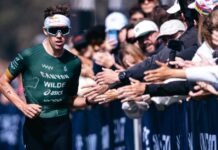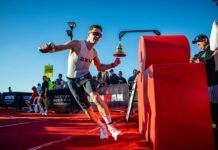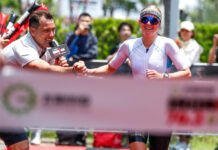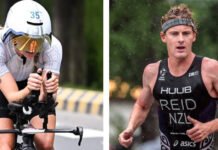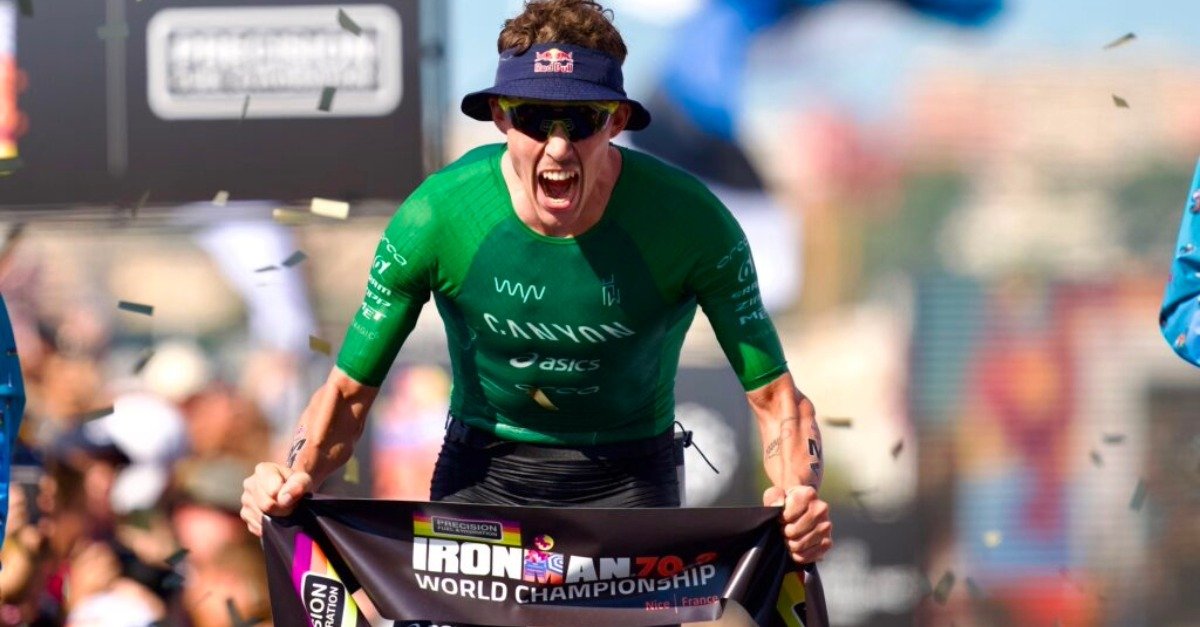
He has Olympic silver and bronze medals, an XTERRA world title, a pair of Supertri gongs, a T100 world title and now, after a day of days in Nice, an Ironman 70.3 world championship.
There isn’t much left on the checklist for Hayden Wilde, the undisputed PTO world No.1, which is exactly the point. More on the 29-year-old’s GOAT-Esque legacy build soon.
For now, the context from the Côte d’Azur on Sunday. For starters, it was New Zealand’s second 70.3 world crown, 18 years after trailblazer Terenzo Bozzone in 2008.
It’s very nice company to keep but this was particularly sweat after the meltdown in Taupō two years ago when Jelle Geens swooped late, snatching victory when a hometown world title seemed Wilde’s destiny.
That hurt because it was in his birthplace and especially because it was a case of de ja vu from Paris earlier in 2024 when the Kiwi lead the Olympic gold medal race almost the whole way, only for Brit Alex Yee to run him down in the final few hundred metres. The two biggest days of his career, and both times the legs gave out at precisely the wrong moment.
Nice was the chance to prove he’d learned the lessons.
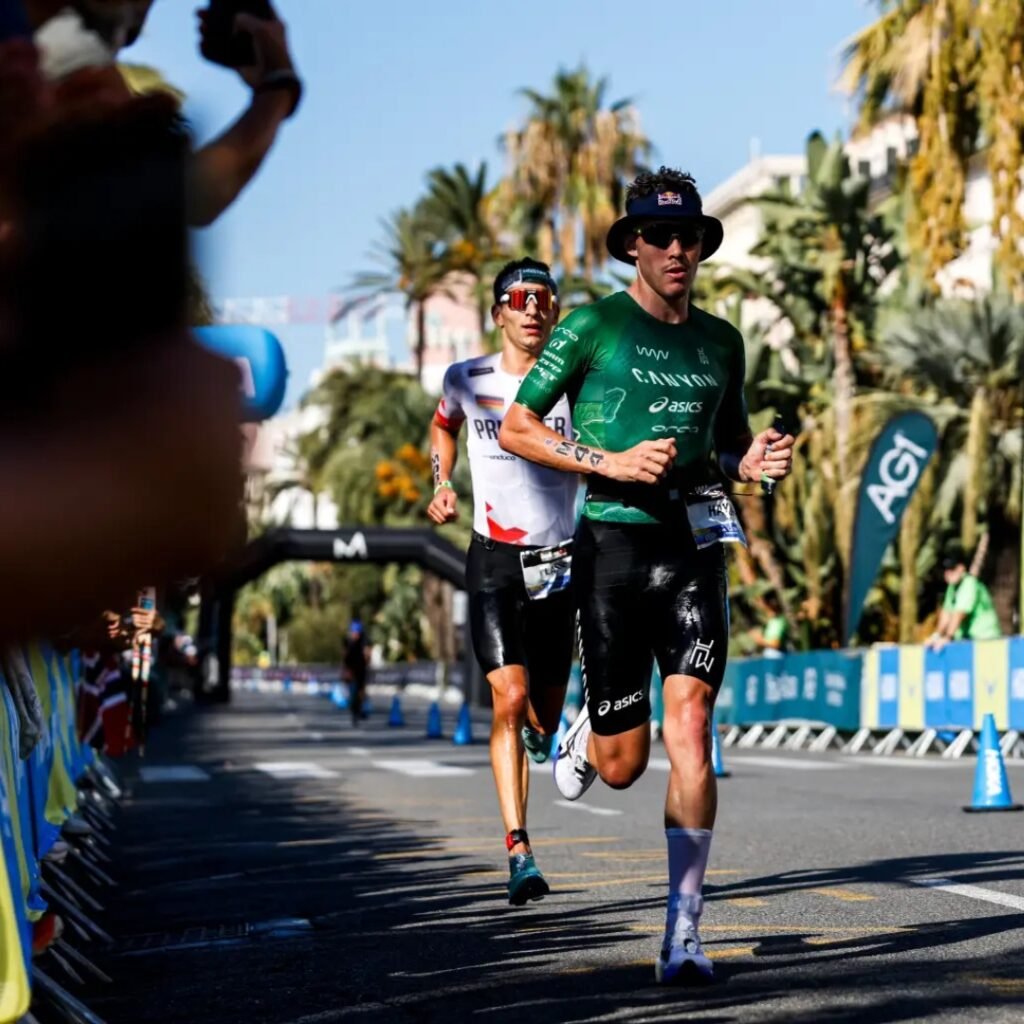
Wilde came out of the water in 22nd — a handy for the Kiwi split of 23:44 for the 1930m swim — then rode the second-fastest bike split of the day, 2:16:50, behind only Rico Bogen, to put himself in control heading into T2. Wilde’s ascent of Col de Vence was impressive but not half as pivotal as his swift descent which meant he set off on the half marathon with a handy buffer over danger men Geens and Kristian Blummenfelt. He’d need it.
Inevitably, Belgian Geens and then Norwegian Blummenfelt hunted the Whakatane Falcon. Big Blu ultimately ran the fastest split in the field, a ridiculous 1:05:12 at 3:06 a kilometre, and dragged himself from 27th off the bike all the way back to within 30 seconds of the lead with three kilometres left. It was the same movie as Taupō and Paris, but this time there was a happy ending for the Kiwi, Blummenfelt running out of runway.
Wilde’s own run — a 1:07:21 at 3:13/km pace— was tactical as much as it was about raw pace: hold something back early, cover the moves when they came, don’t blink again. He crossed the line with 18 seconds to spare, 3:50:51 to Blummenfelt’s 3:51:09, with Geens third in 3:52:40 off the second-fastest run split of the day, a 1:07:12.
Don’t dismiss Wilde’s run; it was the third fastest of the day and he did it without a watch in hand. The Andorra-based Kiwi kicked his own GPS unit into the marina coming out of T2 and spent the entire run doing the maths in his head instead.
“…There’s still a 30-second gap, so I was doing calculations in my head… Kristian has to run sub-3s to catch me. So I was like, just keep trying and keep trying.”
On the watch itself: “I had all my things in my hand, and I kicked my watch, and I think I kicked it all the way into the marina, so I might have to go and buy a new one. So that was a bit frustrating.”
Maybe losing it did Wilde a favour, the Kiwi having to run on feel rather than trying to run to numbers like he did in Taupō and Paris.
Asked whether it was a plan to sit and wait or just instinct, Wilde said it was mostly reading the race as it unfolded.
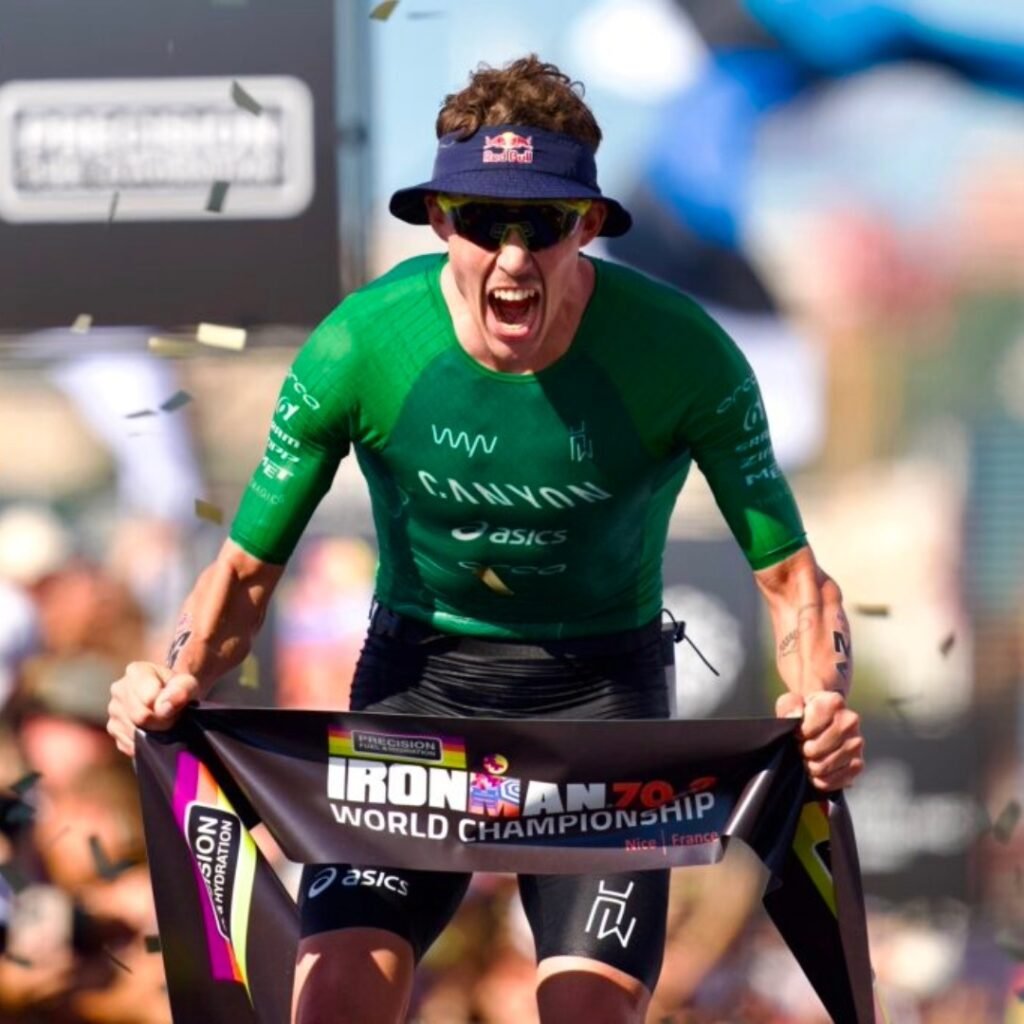
“I was just playing with how I felt… when it went down under a minute, I was like, okay, now it’s time to go.”
He admitted the opening 5-6km of the run were deliberately conservative, and that it paid off exactly when Blummenfelt came calling late.
The world champion had the last word on his old rival too, borrowing a line straight from the man who nearly ran him down: “a great quote from Kristian was, ‘it’s worse to lose’ — and yeah, it definitely is.”
Back to Wilde’s legacy. We’re witnessing one of the most decorated short-to-middle-distance racers of his generation, and the 29-year-old is showing no signs of slowing down. After racing the Supertri Pro Series Final in Jersey last weekend, and Nice on Sunday, next weekend it’s the T100 French Riviera, the week after that the WTCS Grand Final in Pontevedra, and from there a defence of his T100 title at the Qatar decider in December. A distance mix and match most wouldn’t dare attempt in a season, let alone a month or so.
Beyond that, it gets more interesting again. The WTCS becomes the T50 Triathlon World Tour from 2027, and you can bet Wilde will focus on closing the gap to the likes of Matthew Hauser with LA 2028 becoming as ever bigger blip on the radar. Olympic gold is the one true gap on the résumé, the one that got away in Paris, and you can be sure Wilde wants to put that right and complete his set of medals.
Beyond LA? World Triathlon is actively pushing to get the T100 distance added to the Olympic programme at Brisbane 2032. If it happens, Wilde — already the reigning T100 world champion — might very well go another Olympic cycle.
The smart money says a genuine assault on the full Ironman distance sits somewhere in that window too, run in tandem with a home-region T100 Olympic bid.
LA28. Brisbane ‘32. Kona on repeat. It’s a mouthwatering prospect and just like Sunday in Nice, promises to be appointment viewing each and every time as a generational talent emboldens his already impressive legacy.