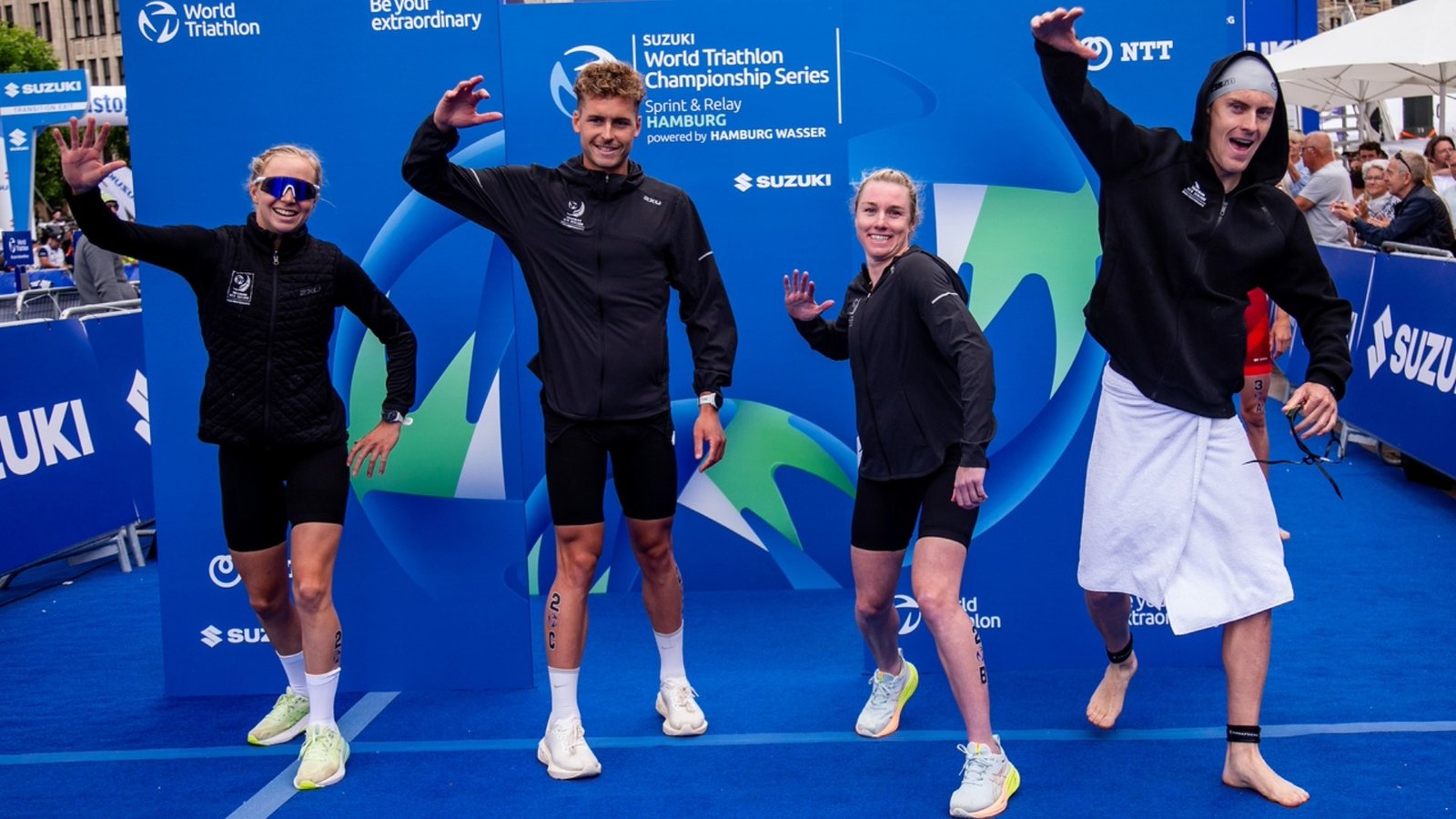
The temptation is to frame Monday’s Oceania Mixed Relay Championships at Mitre 10 Park Hawke’s Bay as a novelty.
Racing while commuters battle Hasting’s Monday morning traffic en route to the office. A quirky course complete with a swim held in a shallow canoe polo pool. It’s almost as if the continental MR has been tacked onto the more important Oceania sprint championships being held at Napier’s Ahuriri Beach on Sunday.
But that misses the point entirely.
RELATED
Men: Wilde’s race to lose with a mre compelling U23 narrative?
Women: Four into two doesn’t go
In the context of the LA ‘28 Olympic cycle, and specifically New Zealand’s strategy within it, this is where the real race to the XXXIV Summer Olympiad begins. And it is being shaped first and foremost by New Zealand leading female quartet.
Before we get to the potential makeup of the Team NZL ‘A’ team for Monday (one of potentially seven NZL lineups), first some important context.
LA via the MR
The LA ’28 Olympic pathway runs through the Mixed Relay first with 22 of the 55 individual start slots per gender allocated via relay-qualified nations.
Qualify a relay team and New Zealand secures two men and two women for Los Angeles before individual rankings are even finalised. That is four quota spots locked in. Miss it, and the entire campaign shifts into the far less forgiving individual pathway, where rankings, race selection and margins become tight very quickly.
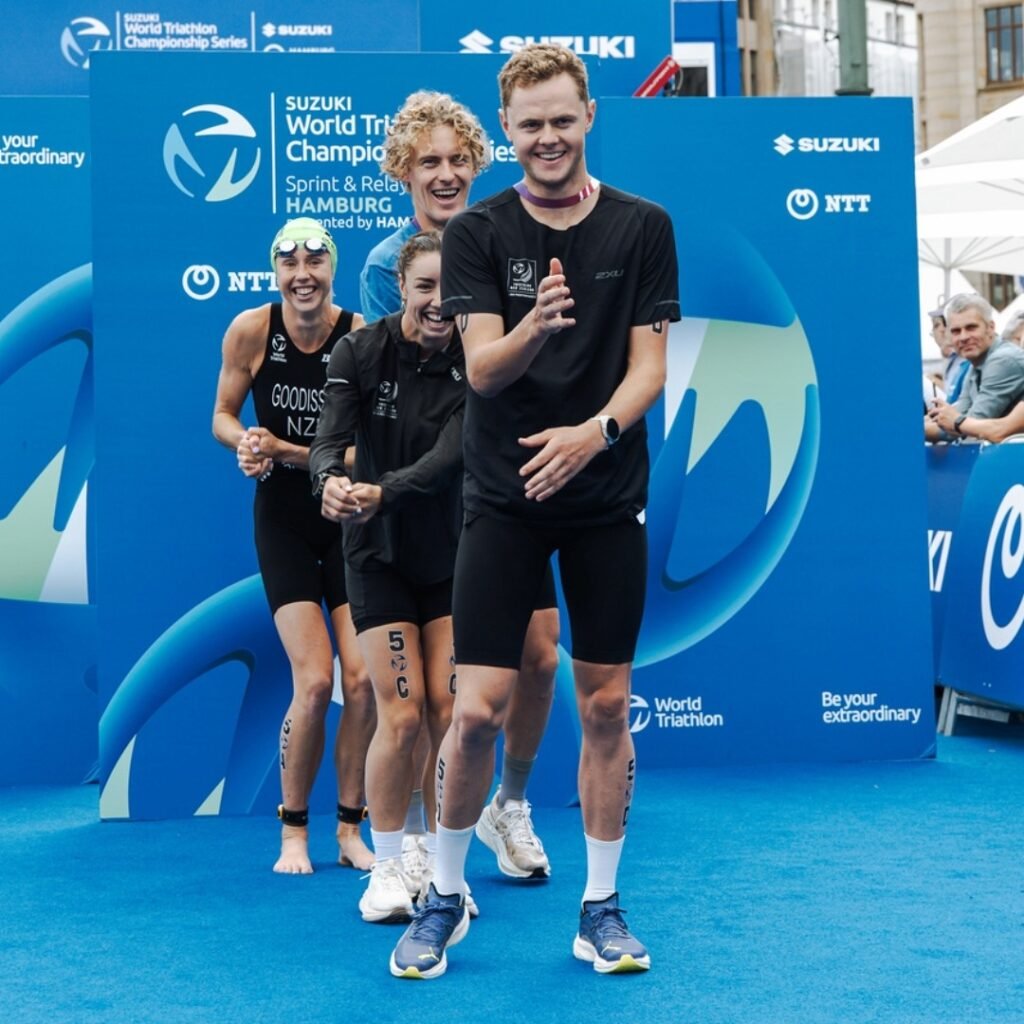
The LA qualification window opens on May 18, 2026 and, in year one, three Mixed Relay opportunities carry the most weight:
- May 31–June 1: WTCS Alghero (ITA)
- June 21–22: WTCS Quiberon (FRA)
- July 12–13: WTCS Hamburg (GER) – World Championships
Hamburg is the key marker. As the World Championships, it offers automatic Olympic qualification for the winning nation and the largest points allocation for all others.
Across the entire cycle, a top-eight position on the Mixed Relay Olympic Qualification Ranking is the realistic target to secure a place in Los Angeles. NZL is currently ranked 10th.
Selection for the European window teams begins now, and it is form-driven.
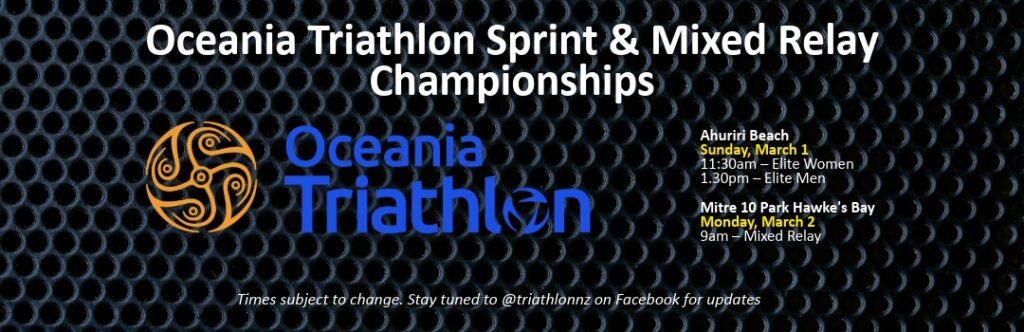
Performances in Sunday’s individual racing will inform selection for Monday’s MR, which in turn shapes early relay combinations. Beyond Hawke’s Bay, athletes will be assessed across a defined block of racing and benchmarking:
- Tri NZ High Performance Super Sprint – Mt Maunganui (March 26)
- Oceania Cup Auckland (March 29)
- Oceania Super Sprint Championships Runaway Bay, Gold Coast (April 18-19)
Selectors have scope to consider the broader body of work, but the direction is clear: current form, versatility and relay suitability will determine who earns selection for the European WTCS Mixed Relay programme and, by extension, who sits at the front of New Zealand’s LA ’28 Olympic campaign.
Which brings us back to Hawke’s Bay and that not so quirky Monday morning race.
With Tayler Reid and Dylan McCullough out injured, Hayden Wilde and Saxon Morgan are at short odds to fill the two male slots in the NZL ‘A’ team, save for a huge upset or injury niggles from Sunday.
But which women they are teamed with? An altogether more complicated plot.
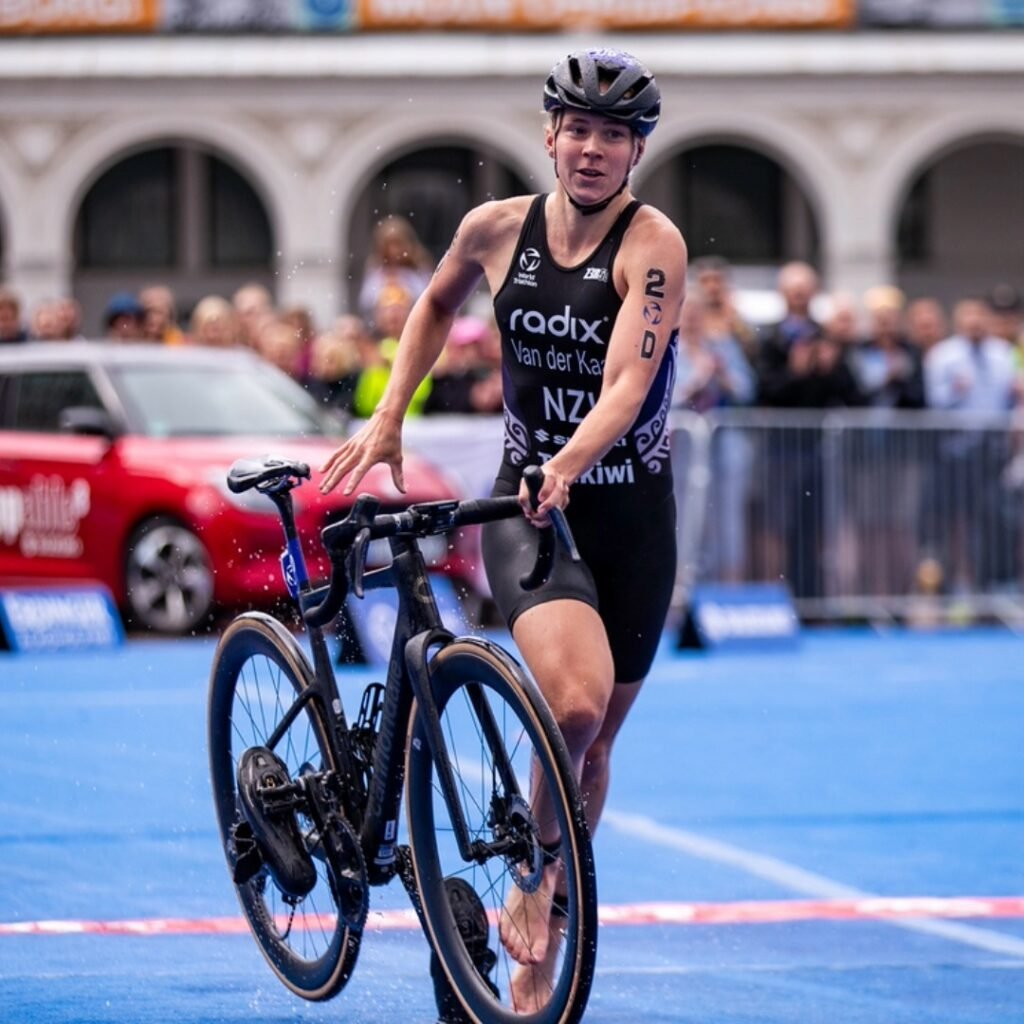
Nicole van der Kaay and Ainsley Thorpe have been the constants across the Tokyo and Paris cycles, but Eva Goodisson and Brea Roderick have entered the equation with fresh speed and newcomer trajectory.
It adds further spice to Sunday’s individual racing, as might the make-up of the B team and any potential head-to-heads that leads to for the selectors to evaluate.
And then, of course there is Australia.
Continental Positioning
A key wrinkle in the LA ’28 qualification system is the introduction of a continental “safety valve” for the Mixed Relay. For New Zealand, that brings Australia squarely into play, as ever.
Under the new model, the highest-ranked nation from each continent that has not already qualified through the main Mixed Relay pathways will secure an Olympic relay spot. For Oceania, that effectively turns qualification into a direct contest between New Zealand and Australia if neither nation has already locked in a place through World Championships or the global ranking.
On paper, that offers a fallback. In reality, it raises the stakes.
Australia are the reigning Mixed Relay world champions and have depth, even if much of it will be missing in Hastings. If New Zealand is forced into relying on the continental pathway, it is no longer just chasing points, it is racing Australia head-to-head for Olympic qualification.
The preference, therefore, is clear: qualify through the main Mixed Relay ranking, where a top-eight position is likely enough to secure a place in Los Angeles. That route removes dependence on Australia’s results and gives New Zealand control of its own campaign.
But with both nations largely targeting the same races, the continental dynamic is never far from the surface. Every relay becomes a points play, not just for global ranking, but for positioning within Oceania.
Which circles us back to Monday, and to the Kiwi women. Because if this cycle has a defining contest, it is not New Zealand versus Australia, or even New Zealand versus the world. It is internal, it looks competitive, and very clearly unresolved.
The race within the race to LA ‘28 starts at 9am on Monday. Quirky venue. Utterly compelling narrative.