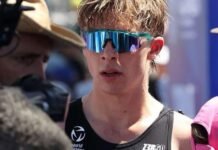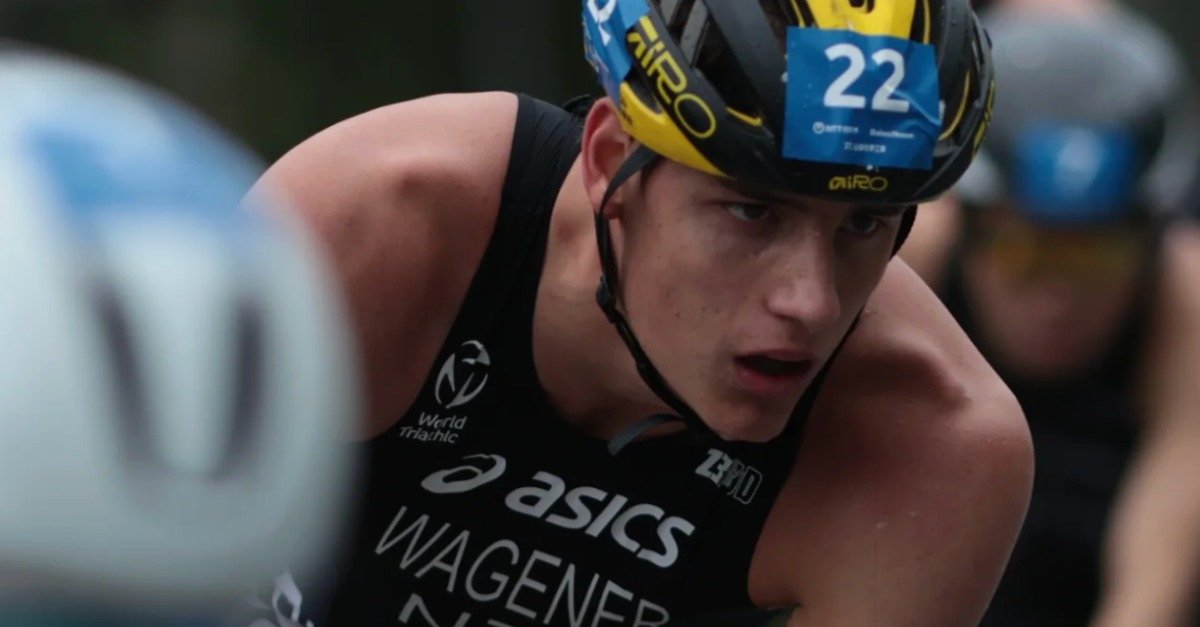
Caleb Wagener might be just 18-years old but he’s already thinking at a level well beyond his years, right down to the things like shoe choice for a World Championship course he’s already won on.
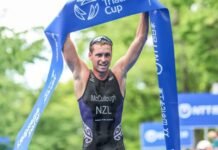
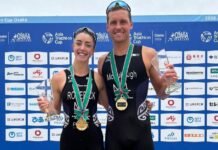
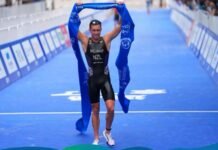
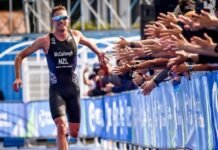
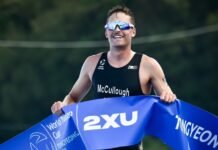
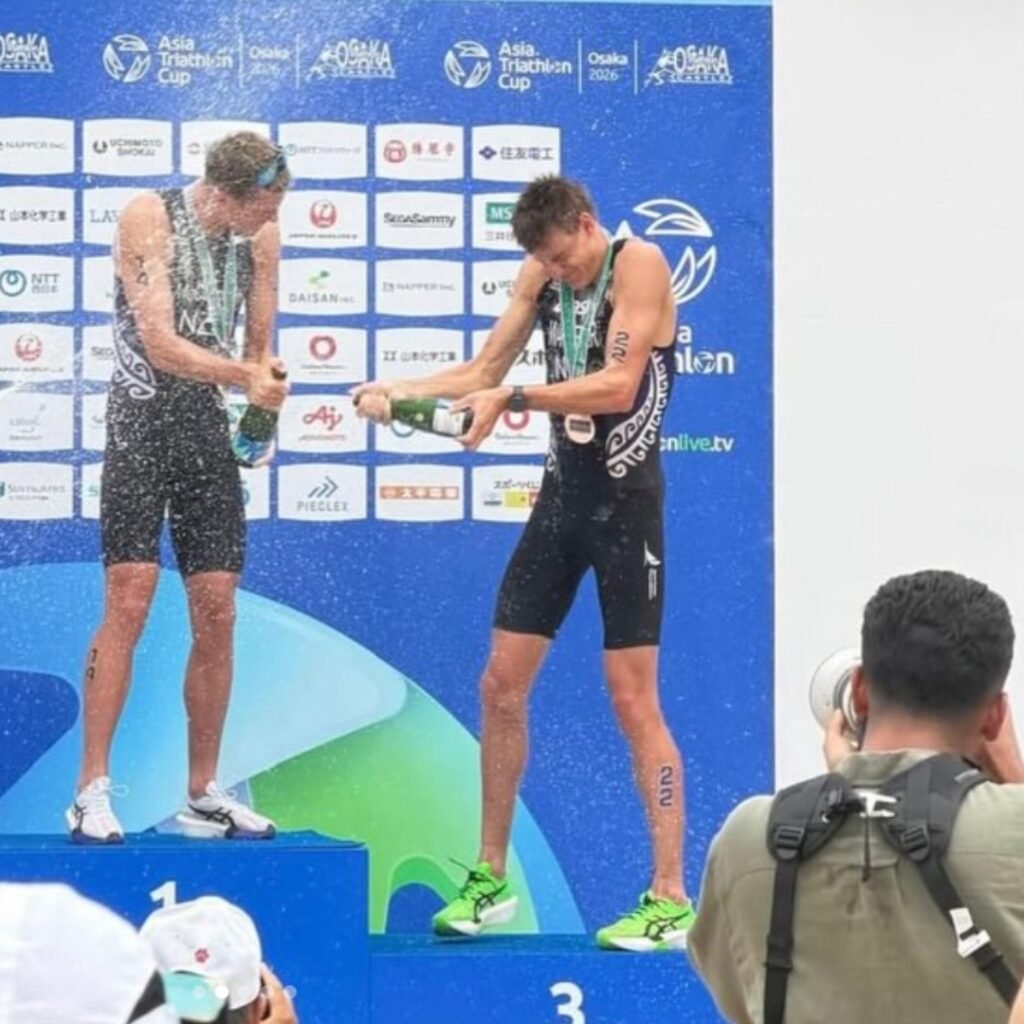
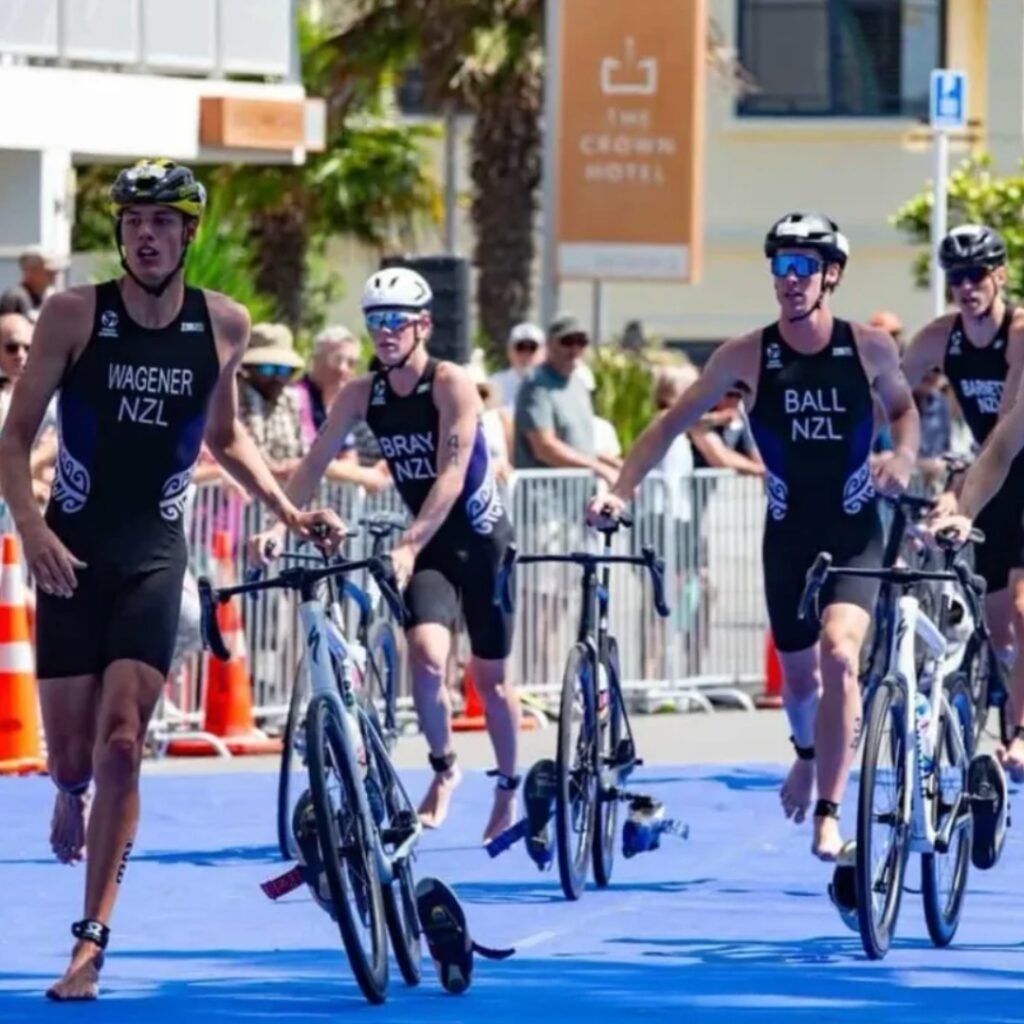
The Aucklander’s bronze medal among the elite men at Asia Cup Osaka Castle in May — sealed with the fastest run split of the day alongside Paris Olympian Dylan McCullough — announced a junior talent that gives Team NZL great hope for the future.
SBR-Tri.com caught up with Wagener in Banyoles, where the Ben Hamilton-coached World Junior Duathlon champion is building toward September’s World Junior Triathlon Championships in Pontevedra.
The next stop is this weekend’s European Cup Holten in The Netherlands where Wagener will race alongside Robbie White, Finnley Oliver, Phoebe Carter, Lulu Johnson and fellow juniors Sophie Webber and Hayley Cornwall.
What follows is a fascinating insight into the thinking of a teen on a well-plotted course to Pontevedra courtesy to a level of detail right down to which pair of racing ASICS are best suited to his bid for further glory in Spain.
*** *** ***
The Osaka moment
You’re 18 years old and you just stood on an elite podium at Asia Cup Osaka Castle alongside Dylan McCullough, NZL’s Paris Olympic hero. When the race was done and that result was real, what did that actually feel like, and did it change how you see yourself as an athlete?
Standing on the podium in Osaka next to Dylan, was pretty incredible. I remember getting across the line and realizing I came third, and being super shocked because I didn’t see myself getting that high in that race. You know, you always hope for a really good result like that, but for it to actually happen was… was quite remarkable.
And the thing that made it even more special was that the run was actually finally clicked. Having the fastest run split of the day, it’d been a bit of a point of contention because I can run pretty well without coming off the bike, and so for it to start finally clicking in the end of a triathlon, it meant a lot to me, for that training to work.
It didn’t really change how I view myself as an athlete. In the past, I’ve raced against some really top people, and I think I’ve always thought about and planned on how I could win or be in the race, no matter the level. So, coming third, it was… while it did confirm that I was doing something right in training, the mindset going into race was no different, and it hasn’t really changed since or due to that race.
*** *** ***
The trajectory
You went from 17th at Junior Worlds in Wollongong last October to bronze at Asia Cup Osaka, with a best-of-race 5km run to seal it. What’s clicked to take you ahead in those eight months? Is there one thing that explains the jump?
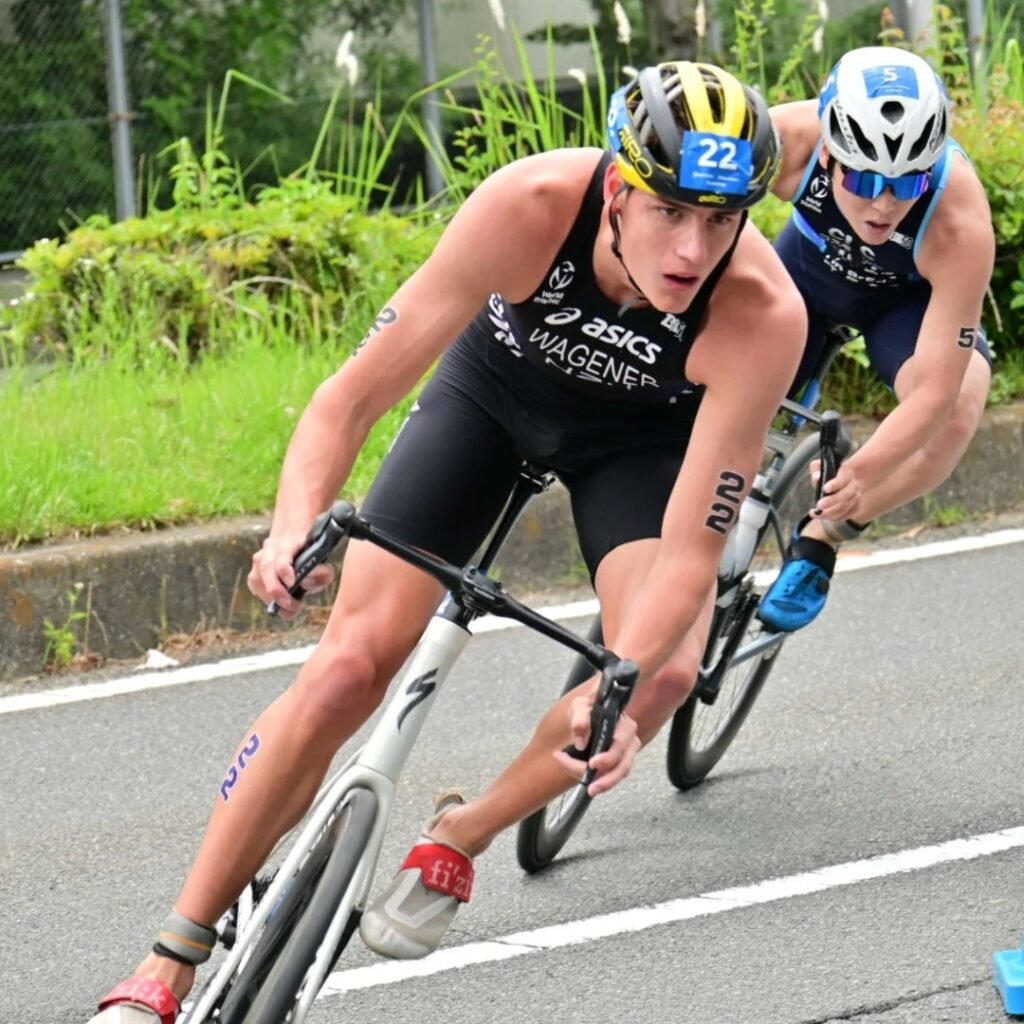
The thing to mainly click in terms of the trajectory of my results, has just been endurance. I kept mileage very low when I was younger, and we had a sit-down with Stephen [Sheldrake] and some of the other Tri NZ guys and have worked on slowly upping the mileage. And as that’s happened, I’ve been able to run better off the bike than before and have felt better in sessions. And I think that was a really key aspect to why I got a good result in Osaka.
I don’t think that is the only thing that would have led to that result. I think all-round experience, while I still have a lot to learn, I think I’ve started to come to grips with how to race a triathlon a bit more. Going into Junior Worlds last year, where I came 17th, it was kind of… I could almost count the amount of triathlons I’d done on two hands.
However, like, over the summer, New Zealand summer, I dedicated a lot of racing into triathlon and trying to figure out where my limits were and feel like I’m starting to get a grip of how to race things. I’ve been getting closer and closer to, like, a well-executed race and Osaka, I basically executed exactly as I wanted to, so there was no silly errors that cost me anything and that had a big impact on how the race went.
*** *** ***
The Kitzbühel experience
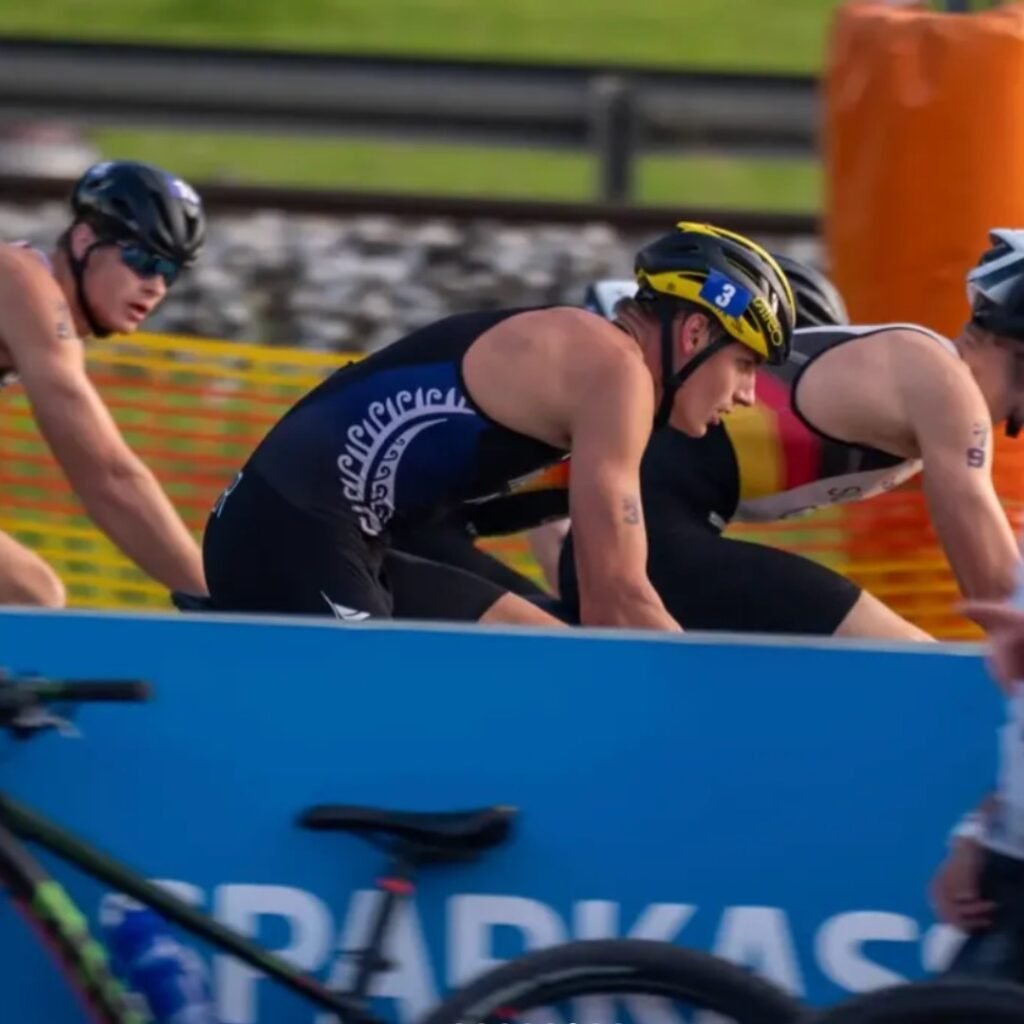
You were 17th at European Cup Kitzbühel, your first European Cup start and a two day eliminator where you won your heat. Racing elite men in Europe is a different world to Oceania and even Asia. What actually surprised you most when you got into that race?
The thing that surprised me the most in Kitzbühel was probably the run speed of the Europeans. While I’d been told that they were going to be quick, I didn’t expect them to be quite as quick after doing the semifinal the day before. I kind of expected a little bit less speed. That was the thing that mainly surprised me, as well as the heat. Being in Austria, I didn’t expect it to be hot because it was a mountain town. So, when I heard “mountain town” I was like, okay, it’ll be a pretty all right temperature, but it was actually way warmer than I was expecting.
*** *** ***
Holten this weekend
You’re ranked 10th in the European Cup Holten field, which is no small thing for a junior. What’s the goal this weekend? Are you racing for a result, for experience, or both?
I always go into a race expecting or planning on how to get a really good result, and Holten’s no different. I’ve had lots of talks with Ben [coach Ben Hamilton] and with other people around me about how I’m going to be able to get a result out of Holten, especially with the field being very good level. I think going into it 10th is quite a—it’s an interesting position, but I mean, it’s a really cool opportunity.
I also think that I am going there as well to get experience. I think a big European field is a great opportunity to not only see what I’m missing in my arsenal at the moment of triathlon skills—what I can work on when I go back to New Zealand before Junior Worlds—but also being under a lot of physical pressure in the entire triathlon, so in the swim and in the bike and in the run. That’s going to bring those small mistakes to light that will end up being large contributing factors. And so then being able to reflect on those mistakes made and figuring out what can I do to negate those happening again in big races such as Junior Worlds, I think that’s going to be a massive point of my experience in Holten, is just trying to figure out what can I do better when I’m under pressure, and seeing what’s going to go—what could go wrong, and what can I do better, basically.
*** *** ***
The coaching dynamic
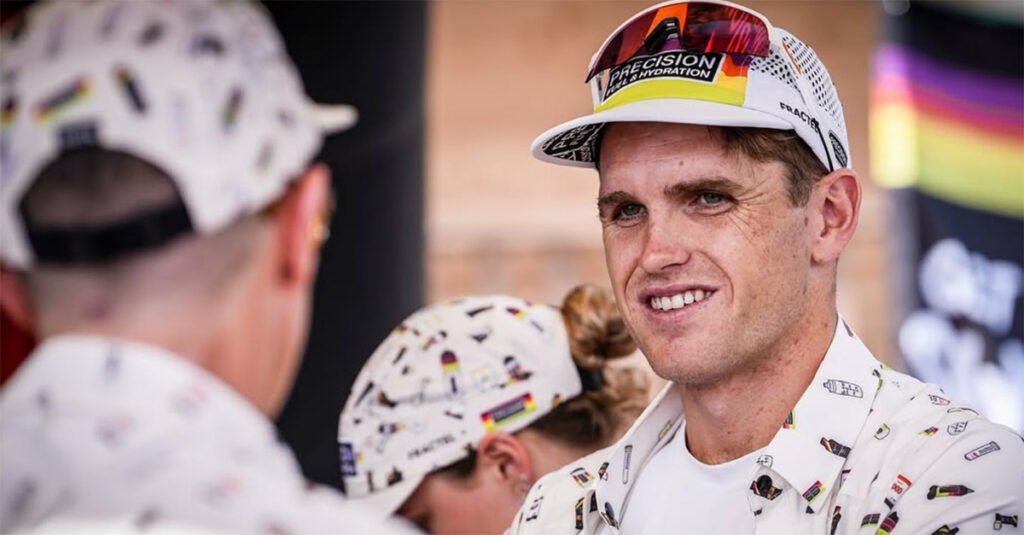
Ben Hamilton (pictured below) is a mid-long distance specialist, Ironman NZ bronze medallist in 2024. What does he bring to your programme that a short course specific coach might not?
Ben has been my coach for just over 4 years now. I first met him at— as an Auckland Grammar cycling coach, when I was in junior. And we got on really well and had some good results, and I enjoyed the way that he coached. And so I decided to ask if he could keep coaching me in triathlon.
And I think, due to the amount of times I’ve spent with him in early mornings in cycling and planning races and cycling and running and triathlon, I think that I have a lot of trust and communication in Ben, and we understand each other and what my body can do. I think also he’s seen the way I race and the way I conduct myself in a race, and so he can kind of help to point me toward the correct way of racing and the correct way of training. Obviously, he’s a great triathlete in his own right, in long distance, so we do a bit of training together, and that really helps because I see him loads per week, and so if there’s anything that’s going wrong, or if there’s— if changes need to be made, I can make them really, really quickly, depending on how I’m feeling. And that kind of— that’s helped with the block coming into Holten, just trying to get everything right.
And if I’m feeling a bit down on one of the components of the triathlon, then we can talk about it and we can figure out how we can increase that. He also used to bike race in an extremely high level, so his understanding of how a bunch works and where to sit in a bunch, he’s tried to pass down to me. And while I still need to get that experience in the actual triathlon itself, having that, like, conceptual idea of where to be has really helped in terms of making sure that I’m in a good position and trying to save energy.
*** *** ***
The bigger picture
World Junior Champs in Pontevedra in September is the destination, and you’ve already been there — you won the World Junior Duathlon title there last June. Does knowing that course /environment / atmosphere change how you’re approaching this whole European block and what else will you do to prepare?
Pontevedra World Champs in September, that’s my main goal for the year. As you said, I won the Junior World Duathlon title there last June, and I think that knowing the course is a massive advantage. It changes a lot of things of how I’m approaching the race and how I’m training for it. There are some specific things about the course that I remember that are driving things, like shoe choice for example. It’s a very technical run, and so I’ll be using the Metaspeed Sky instead of the Metaspeed Ray, just because it’s a bit more stable. And so, in Europe I’ve kind of— even though some courses may be better for wearing the Ray— I’ve been trying to get myself into the habit of being able to run fast in the Sky. And so I feel like that’s one massive point.
I think the other thing in Europe is that I’m trying to figure out where my limit is in terms of the bike and the swim, or just mainly the bike on hills and more technical courses, so that I can really maximize the energy levels going into the run and make sure I can run well at the end of the triathlon in Pontevedra. The courses I’ve been doing in Europe are similar-ish, so kind of getting those data points that we can then look back on and see if there’s anything I need to change in training towards Pontevedra has been really helpful.
*** *** ***
Pontevedra prep
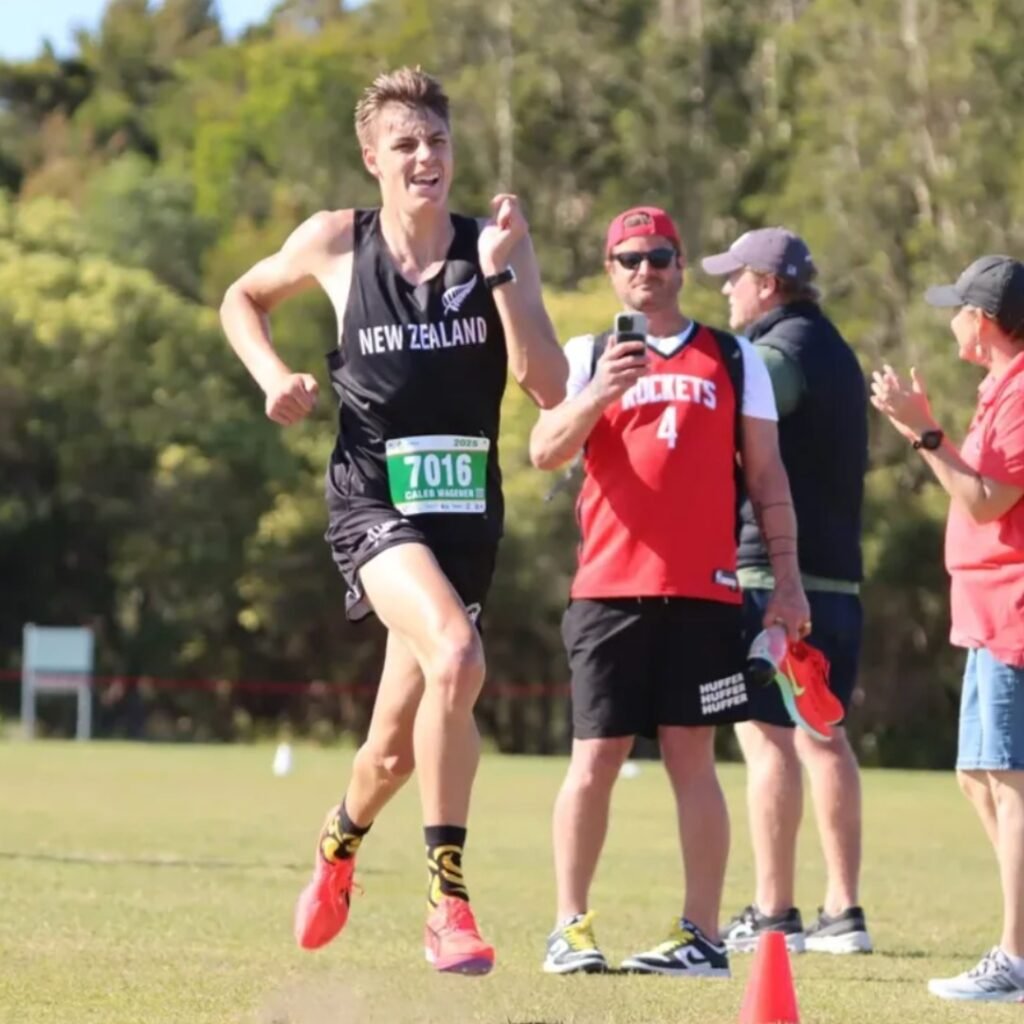
Do you have any other athletics/ cross-country races you’ll do back in New Zealand over winter to help the prep for Pontevedra?
I’m probably going to race some cross-country for a couple reasons. The first is to get that mental hardness for when the hills start to really bite and when they start to affect how well I’m able to run and the rhythm. But also to simulate that changes in effort needed throughout a triathlon run where there’s people surging and people attacking, and being able to go with those and put in more effort in some points and put less effort in other points, and learn how to run downhill, learn how to run corners, I think that’s all valuable learning from cross-country that I’m going to take. So, I think that we’re going to do a couple cross-country races when I get back to New Zealand to help with that. I think me and Ben have had discussions about potential specific trainings that could give me an edge when it comes to crunch time on the run, due to the type of course. Just how to train for that.